

Pamukkale & Hierapolis Thermal Terraces: Complete Visiting Guide from Istanbul
How to explore Turkey’s blinding white travertine cliffs, swim among ancient Roman pillars in Cleopatra's Pool, and hike the grand amphitheater of Hierapolis.
water_drop The "Cotton Castle" of Türkiye
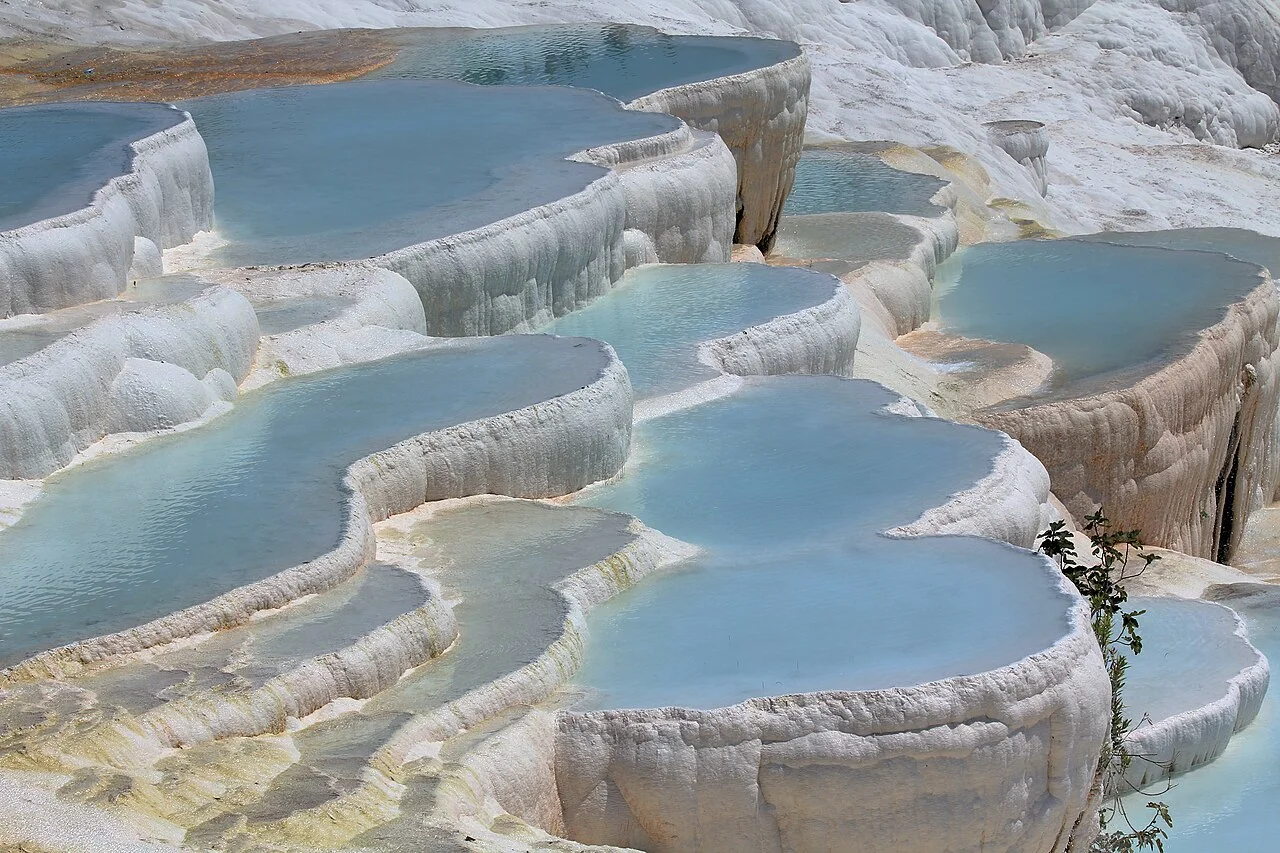
Located in southwestern Turkey’s Denizli province, Pamukkale (literally "Cotton Castle" in Turkish) is a UNESCO World Heritage site celebrated for over two millennia. Superheated thermal waters rich in calcium bicarbonate emerge from deep subterranean seismic faults. As water cools and spills over cliff edges, calcium carbonate solidifies into cascading snow-white travertine pools filled with striking turquoise thermal water.
1. Walking the Travertines: Essential Visitor Rules
To protect the delicate calcium deposits from erosion and pollution, footwear of any kind (including water shoes, sandals, and flip-flops) is strictly forbidden on the white terraces.
- • Bring a lightweight tote bag: You will carry your shoes by hand throughout the walking terrace.
- • Textured ridges: In parts, the calcium deposit can feel firm or slightly sharp under bare feet. Walk slowly along water flow lines.
- • Sunglasses are essential: The chalk-white limestone reflects sunlight intensely, creating extreme glare even on overcast days.
2. Swimming in Cleopatra's Antique Pool
Directly above the terraces lies the Antique Pool, a natural thermal spring created by an earthquake in the 7th century CE which collapsed the surrounding Roman Doric Temple of Apollo into the water.
Today, visitors can swim in warm, effervescent 36°C (97°F) mineral water while navigating over genuine antique marble columns, fluted capitals, and ancient pedestals resting on the crystal-clear pool bed. The water is celebrated for its therapeutic benefits for skin conditions and blood circulation.
3. Hierapolis: The Great Greco-Roman Spa City
Founded in the 2nd century BCE by King Eumenes II of Pergamon, Hierapolis served as an imperial healing retreat. Key archaeological highlights include:
-
theater_comedy
The Grand Roman Theatre: One of the best preserved Roman theatres in the Mediterranean basin, accommodating over 12,000 spectators with intricate mythological friezes.
-
account_balance
The Northern Necropolis: Stretching over 2 kilometers, containing more than 1,200 limestone and marble sarcophagi of Roman dignitaries who came to heal and were buried here.
-
church
Martyrium of St. Philip: An octagonal memorial marking where Philip the Apostle was martyred in 80 CE.
4. How to Visit Pamukkale from Istanbul
Driving directly from Istanbul to Pamukkale by road takes roughly 7 hours. While possible, the most comfortable way is either:
- Domestic Flight (Day Excursion): 1-hour flight from Istanbul Airport (IST) to Denizli Çardak Airport (DNZ), where our private chauffeur meets you at the gate for a 45-minute transfer to the terraces.
- The 9-Day Turkey Circuit: As part of our flagship Turkey Grand Tour, where your private Mercedes van travels smoothly from Cappadocia through Konya to Pamukkale, before heading down to the Mediterranean coast of Antalya.
Turkey Grand Tour (8-9 Days)
Experience Pamukkale thermal pools, Cappadocia hot air balloons, and Istanbul imperial sights.